What to pack for La Guajira: the checklist
This is what to pack for La Guajira on a 2- to 4-day tour to Cabo de la Vela and Punta Gallinas. The list starts from what the tours ask you to bring, and it all fits in a small backpack. Pack light: beyond Uribia there is no paved road, so much of the trip is spent in a 4×4 on desert tracks.
Tour packing list as of October 5, 2026. Source: Punta Gallinas Tours.
Item | What it's for | Priority |
|---|---|---|
Photocopy of your passport | The authorities may ask for ID along the way | Essential |
Cash | No ATMs or card payments on the route | Essential |
Light clothes for hot weather and a long-sleeved layer | Days in the 4×4 and at the stops | Essential |
Swimwear and a towel or sarong | The beaches in Cabo de la Vela and along the route | Essential |
Sandals and closed shoes | The beach, plus walking at Pilón de Azúcar and on the Taroa dunes | Essential |
High-SPF sunscreen, a hat or cap and sunglasses | Sun at the outdoor stops | Essential |
Flashlight or headlamp | The night in the ranchería | Essential |
Light jacket | The night: it can get breezy | Essential |
Reusable water bottle | Staying hydrated during the hours in the 4×4 | Essential |
Personal medication and basic toiletries | Your everyday needs | Essential |
Trash bag | Carrying out your own trash | Essential |
Insect repellent | Keeping insects off | Recommended |
Power bank | Keeping your phone charged | Recommended |
Waterproof bag | Protecting your phone and documents from water and sand | Recommended |
Snacks | Between meals | Optional |
Camera or phone with a full battery | Photos | Optional |
Scroll the table sideways to see every column.
Clothes for the desert
For a 3-day tour in La Guajira, light clothes for hot weather, a long-sleeved layer and something warmer for the night are enough. Choose light colors and quick-drying fabrics: your day is split between hours in the 4×4, stops in the sun and time on the beach, and you spend the night in a chinchorro hammock. Three or four changes of clothes will do.
Day and beach
- Light T-shirts or tops, plus a long-sleeved shirt to cover up from the sun.
- Shorts, a skirt or a light dress.
- Swimwear and a sarong, which doubles as a beach cover-up and a towel.
- A wide-brimmed hat or a cap, and a bandana or buff for sun and sand.
Night at the ranchería
- Light long pants or leggings, which also work for walking.
- A light jacket or sweatshirt.
- Sandals for getting around the ranchería.
Shoes
Bring two pairs. Sandals that can get wet, for the beach and the night at the ranchería, and closed shoes for walking, because you'll be on rock and sand at Pilón de Azúcar and on the Taroa dunes. Comfortable sneakers are fine; heavy hiking boots are more than you need.
If you're booked on the Punta Gallinas tour 3 days, this is your packing list: it's built from the one that tour asks you to bring.
Sleeping in a chinchorro hammock
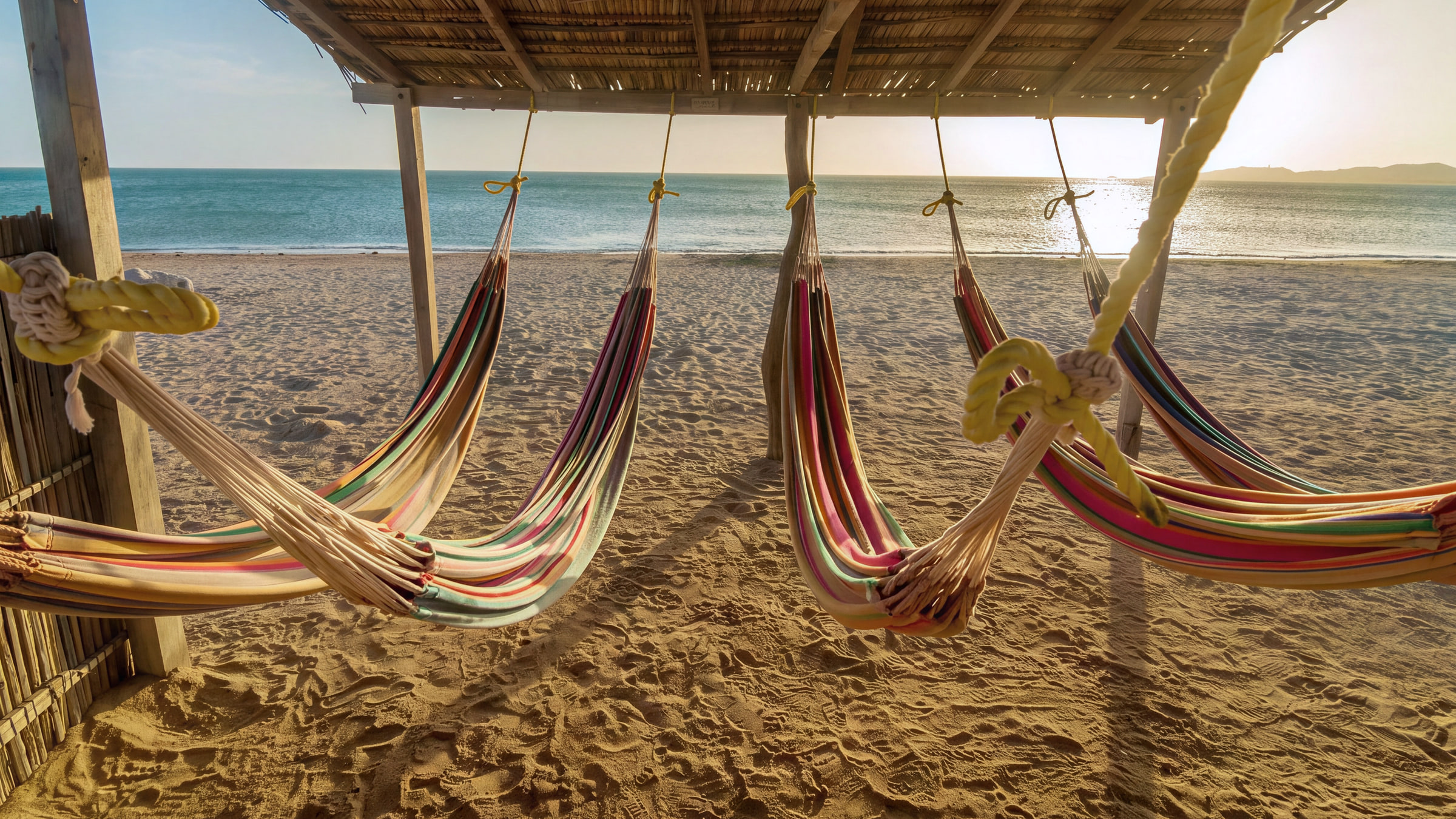
On the tours you sleep in a chinchorro hammock in Wayuu rancherías. If you'd prefer a bed, ask for one when you book. It costs COP 30,000 per person per night, subject to availability. Our La Guajira tours page compares the three tours.
Pack these in a separate bag near the top of your backpack, not at the bottom:
- A flashlight or headlamp, which you'll need in the rancherías after dark.
- A light jacket or sweatshirt, since it can get breezy at night.
- A towel or sarong and basic toiletries.
- A power bank for your phone.
- Earplugs, if you're a light sleeper.
Before you go, ask your advisor what facilities the ranchería has on your dates (bathroom, water and where to charge your phone), and pack with that in mind.
Sun, wind and sand
The tour stops are outdoors: salt flats, beaches, Pilón de Azúcar, the Taroa dunes and the lighthouses. For the sun, bring high-SPF sunscreen and reapply it during the day, plus a hat or cap, sunglasses and lip balm with SPF. If you can, choose a reef-safe sunscreen.
For sand and wind, a bandana or buff covers your face and neck, and a waterproof bag keeps your phone and documents dry and free of sand. The light jacket also helps against the evening breeze.
Fill your reusable bottle before you leave Riohacha and drink water often, even if you don't feel thirsty.
Cash, signal and documents
Cash. There are no ATMs or card payments on the Cabo de la Vela and Punta Gallinas route, so bring cash. Budget for drinks, snacks, crafts, a bed if you ask for one and the tour balance if you're paying it in cash. Carry small bills and split them between two places.
Phone. Ask your advisor what cell coverage is like on your route and dates. Just in case, share your itinerary with someone you trust, download maps and documents before you set off and keep your power bank charged.
Documents. Carry a photocopy of your passport in your waterproof bag, where you can reach it: the authorities may ask for ID along the way. You don't need your original passport on the tour.
First aid and health
Pack your personal medication in your daypack, with enough for every day of the tour. A basic first-aid kit fits in a small pouch: bandages, something for headaches, something for an upset stomach and motion sickness medicine if you get carsick, because you'll spend many hours in the 4×4.
The tours include medical assistance insurance during the trip. Medical costs that insurance doesn't cover are not included, so if you have your own travel insurance, keep the policy details handy.
What not to bring
- A large or wheeled suitcase: it's no use on sand and takes up room in the 4×4. If you're arriving with one, message us on WhatsApp before the trip to ask where to leave it in Riohacha.
- Watches, jewelry or other valuables you don't need.
- Extra clothes: three or four changes are enough.
- Single-use plastic bags and bottles.
Staying safe on the route
On a tour, you travel to Cabo de la Vela and Punta Gallinas with a local driver-guide, in a 4×4, with medical assistance insurance during the trip. The tours leave from Riohacha, not from Santa Marta.
On the road, stay with your group at each stop and follow your driver-guide's instructions. Since there are no ATMs on the route, split your cash between two places and keep it in the waterproof bag with your passport copy. At night, keep your flashlight handy to find your way around the ranchería.
Before you travel, read your government's travel advice for Colombia (in the U.S., the State Department; in the UK, the Foreign Office; in Canada, Global Affairs Canada; in Australia, Smartraveller).
For the route, the number of days and the budget, read our La Guajira travel guide and the overview of La Guajira. We can also send you this checklist on WhatsApp so you have it on your phone during the trip: message us and ask for it.