La Guajira desert: where it is, what it is like and what to see
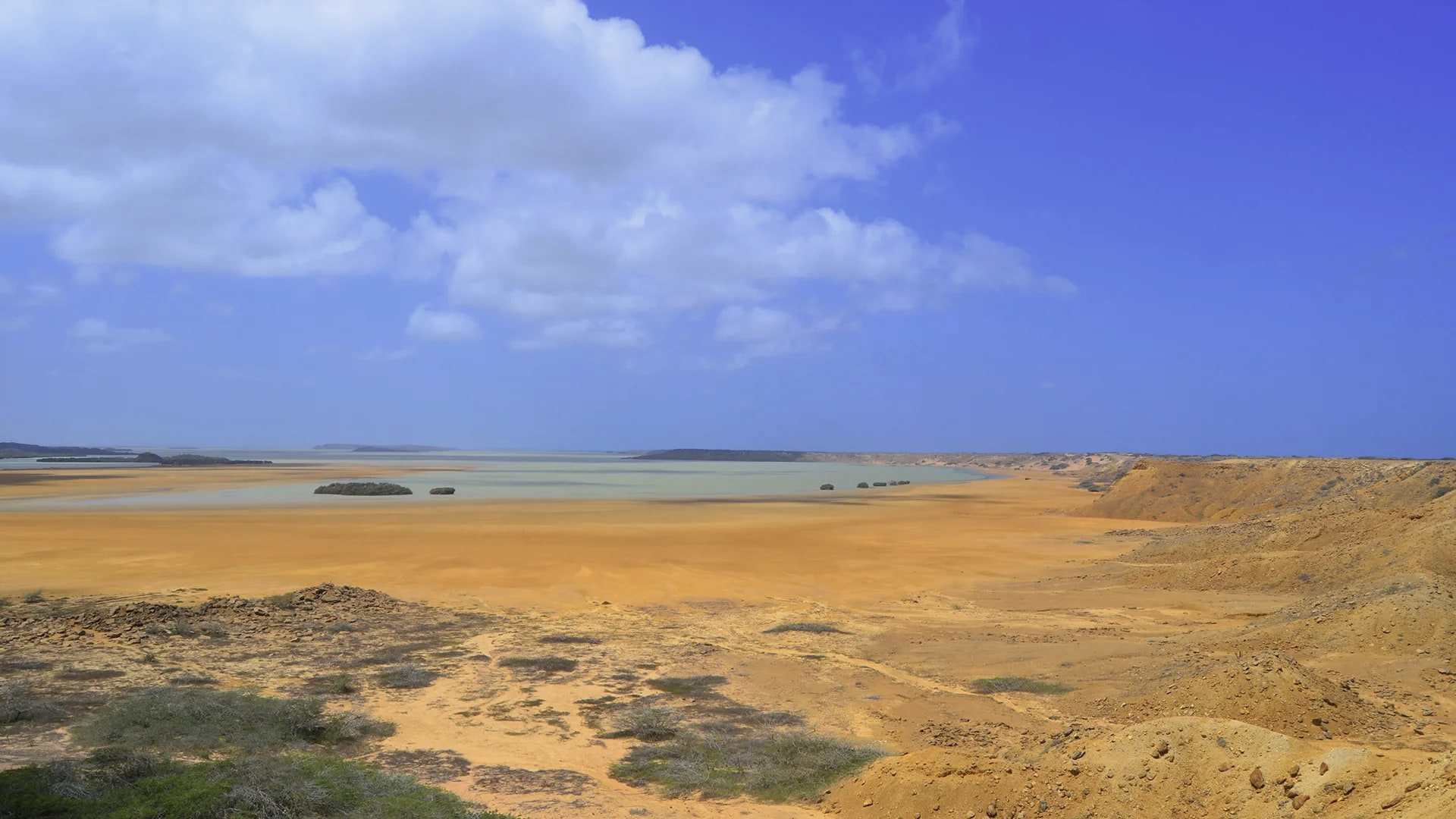
The part of the La Guajira desert covered by the tours is in Alta Guajira, between Uribia, Cabo de la Vela and Punta Gallinas, the northernmost point of mainland South America. La Guajira desert is crossed by 4×4 on desert tracks from Uribia, because there is no paved road.
La Guajira desert at a glance
- Where it is
- Alta Guajira, between Uribia, Cabo de la Vela and Punta Gallinas (La Guajira, Colombia)
- Access
- By 4×4 from Uribia, on desert tracks
- What to see
- Cabo de la Vela, Bahía Hondita, Taroa dunes and Punta Gallinas; before entering, the Manaure salt flats and Uribia
La Guajira
What to see and do in the desert
Manaure salt flats
Before entering the desert, the route stops at the Manaure salt flats, the largest salt complex in Colombia and the first stop on all three tours. The next stop is Uribia, known as the Indigenous capital of Colombia and the last stop before the desert: there the trip logistics are adjusted, with water, snacks, food and cash.
Cabo de la Vela and Punta Gallinas
Once in the desert, Cabo de la Vela is the first night on all three tours. There you climb the Pilón de Azúcar hill by a wooden staircase, with views of the desert and the Caribbean Sea, visit Playa Arcoíris and finish day 1 with sunset at the Cabo de la Vela lighthouse. On day 2 of the 3- and 4-day tours, the vehicle skirts Bahía Honda and Bahía Hondita along the shore (on the 3-day tour, also Bahía Portete), between ochre and reddish earth cliffs, dry scrub and mangroves, until Punta Gallinas, the northernmost point of mainland South America, where you arrive around 2:00 p.m. On day 3 you visit the Punta Gallinas lighthouse.
Taroa dunes
The Taroa dunes, near Punta Gallinas, are the place on the route where the desert sand ends at a beach. From the top of the dune, you can see both the desert you crossed in the vehicle and the Caribbean Sea. They are visited on day 3 of the 3- and 4-day tours; on the 3-day tour, early, before the lighthouse.
When to go
Before setting dates, ask by WhatsApp what the desert track is like for your travel date, especially if you are traveling in rainy season. In any season, tours leave from Riohacha at 8:30 a.m., so it is best to arrive in the city the day before.
Responsible travel in Wayuu territory
La Guajira desert is Wayuu territory: the rancherías where you sleep are family homes. Ask permission before photographing someone, and do not enter a home or an enramada (open-sided shelter) without an invitation. In the vehicle, keep your trash in your waste bag until the next stop and do not throw anything out the window. Use your reusable water bottle, which is on the packing list, so you do not leave plastic bottles on the tracks or in the sand.
Desert flora and fauna
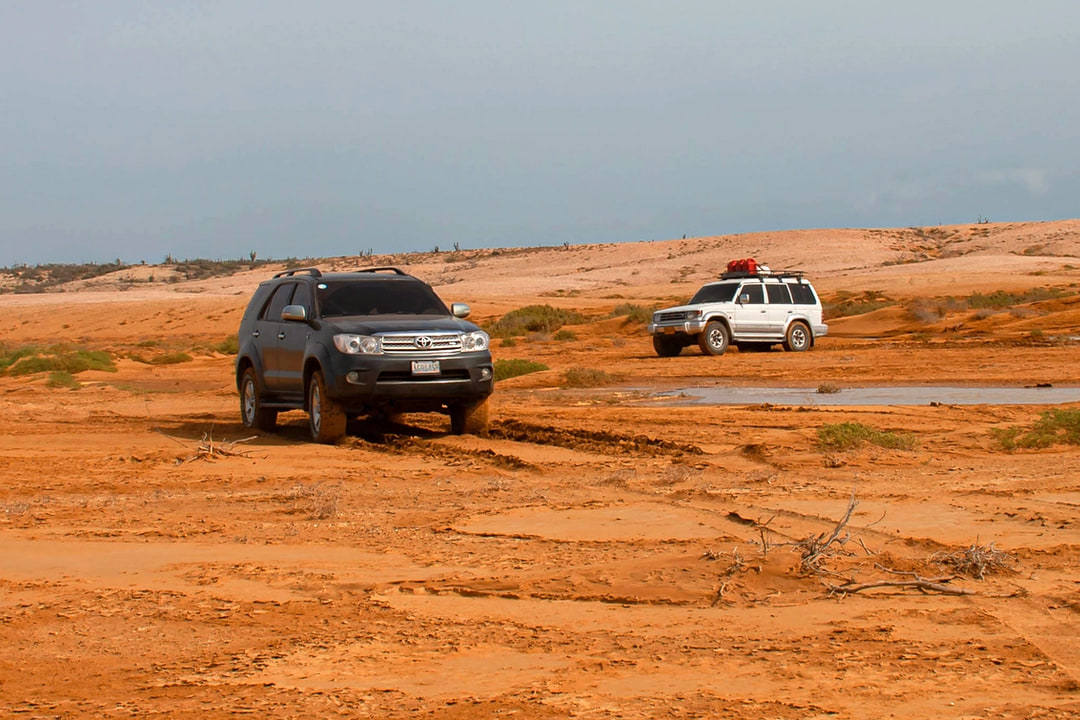
From the vehicle, La Guajira desert is mostly low, dry scrub over red dirt or sand, which in the Punta Gallinas area reaches the sea. When it has rained, the red dirt tracks hold puddles, as in the first photo in the gallery. On the shore of Bahía Hondita there are mangroves, and this page's gallery shows brown pelicans on the shore of a lagoon in Alta Guajira. If you are interested in birds or plants, tell the driver-guide at the start of the day so they can let you know at the stops. Do not pull up plants or take shells, stones or sand as souvenirs.
How to cross it
From Riohacha you go by road to Uribia. From Uribia toward Cabo de la Vela and Punta Gallinas there is no paved road: the route is done by 4×4 on desert tracks. Punta Gallinas Tours travels in air-conditioned 4×4 vehicles, with driver-guides from the region who speak Spanish; a translator is not included.
There are three ways to do it:
- 2-day tour to Cabo de la Vela, with one night in a chinchorro hammock in a Wayuu ranchería (settlement).
- 3- or 4-day tour to Punta Gallinas. The 3-day La Guajira desert tour reaches Punta Gallinas and Taroa with two nights; the 4-day tour adds Punta Agujas and a third night in Punta Gallinas.
- Private 4×4 transport between Riohacha, Cabo de la Vela and Punta Gallinas, for travelers who do not want a tour package. It is quoted by WhatsApp or through the form, and we confirm times by segment when quoting.
The tour packing list includes high-protection sunscreen, a cap or hat, a reusable water bottle, a flashlight or headlamp for the rancherías and a light jacket for the night.
Tours through the La Guajira desert
Tour data as of October 5, 2026. Source: Punta Gallinas Tours.
Tour | Duration | How far it goes | From (COP per person, 6 or more) |
|---|---|---|---|
2 days / 1 night | Cabo de la Vela | 409,500 | |
3 days / 2 nights | Punta Gallinas and Taroa dunes | 900,000 | |
4 days / 3 nights | Punta Gallinas, Taroa dunes and Punta Agujas | 955,500 |
All three tours are private: the price per person goes down when the group is larger. If 2 people travel, the Cabo de la Vela tour costs COP 803,250 per person; the 3-day tour costs COP 1,650,000, and the 4-day tour costs COP 1,874,250. To compare the three routes side by side, check the tours in La Guajira.
More places in La Guajira
All places in La Guajira- La Guajira
Punta Gallinas
The northernmost point of mainland South America, with its lighthouse and Bahía Hondita.
Punta Gallinas: travel guide 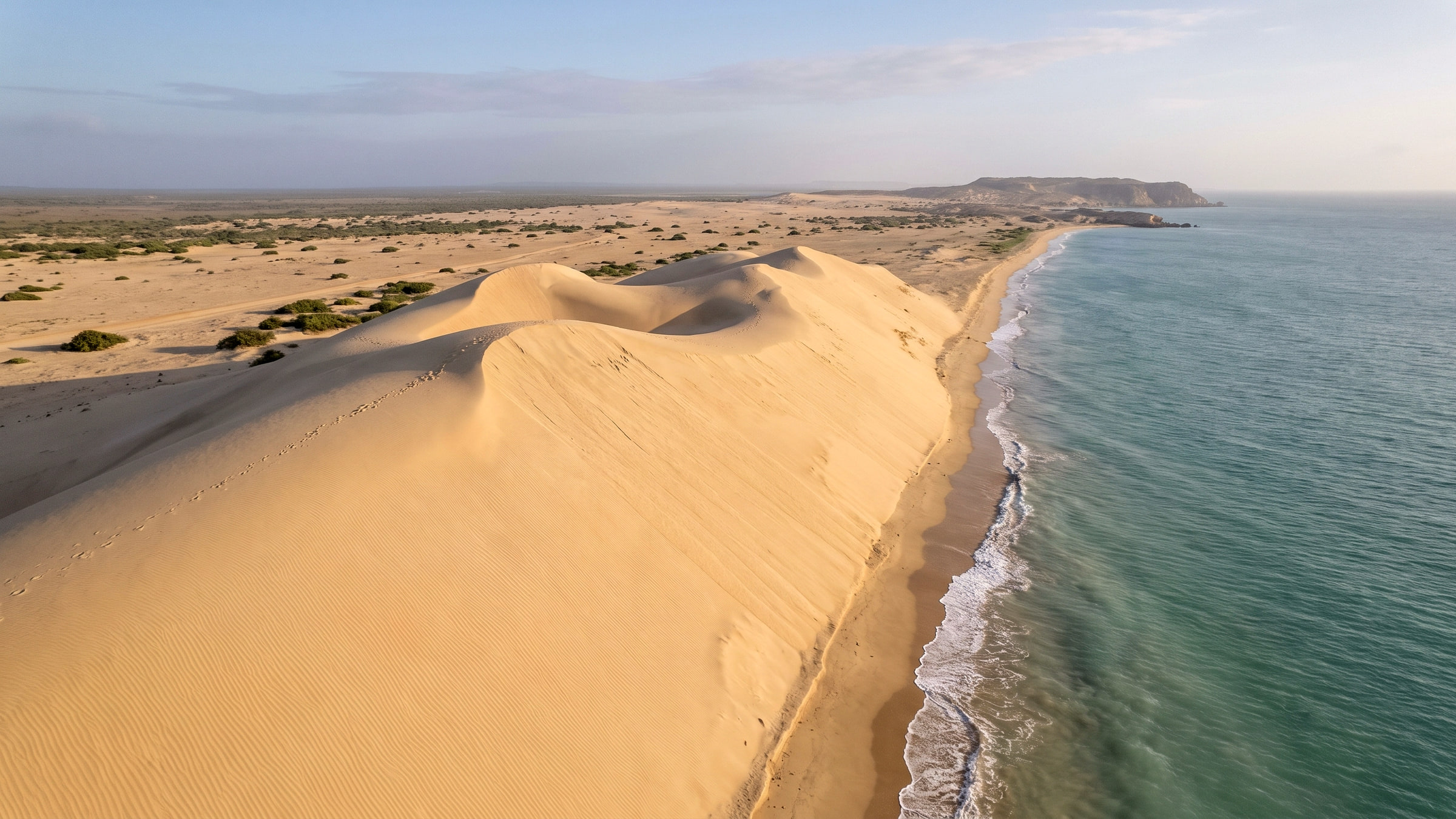 La Guajira
Taroa dunes
Dunes that drop toward the Caribbean Sea, near Punta Gallinas.
Taroa dunes: how to visit and sandboarding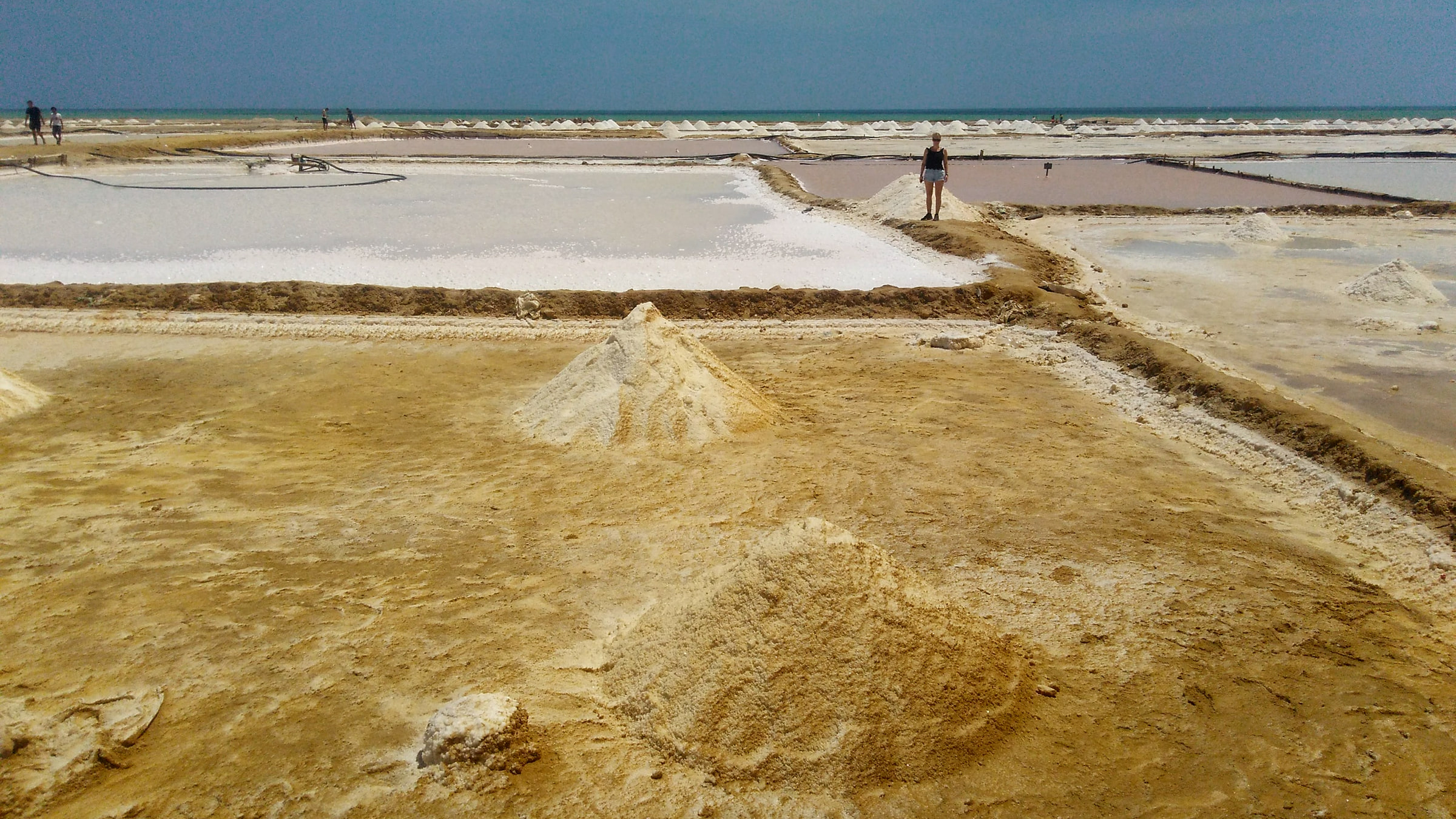 La Guajira
Manaure salt flats
Colombia's largest salt complex and the first stop on the tours.
Manaure salt flats: travel guide
Frequently asked questions about La Guajira desert
Where is the La Guajira desert?
The part of the La Guajira desert covered by the tours is in Alta Guajira, in northern Colombia: it starts after Uribia and reaches Cabo de la Vela, the Taroa dunes and Punta Gallinas, the northernmost point of mainland South America. The tours enter from Riohacha: they go by road to Uribia and from there continue by 4×4 on desert tracks.
Do you need a 4×4 for the La Guajira desert?
Yes. From Uribia toward Cabo de la Vela and Punta Gallinas there is no paved road, and the route is done by 4×4 on desert tracks. Punta Gallinas Tours travels in air-conditioned 4×4 vehicles, with driver-guides from the region who speak Spanish. If you are traveling in your own car without 4×4, leave it in Riohacha.
Can you cross the La Guajira desert on your own?
You can, but you need a 4×4 and you need to know the desert tracks, because there is no paved road from Uribia. Without your own vehicle, Punta Gallinas Tours offers private 4×4 transport between Riohacha, Cabo de la Vela and Punta Gallinas, without meals or lodging, quoted by WhatsApp or through the form. Bring cash: there are no ATMs or digital payments on the route.
Where do you sleep in the La Guajira desert?
On tours through the La Guajira desert, you sleep in a chinchorro hammock in Wayuu rancherías (settlements): in Cabo de la Vela on the first night and in Punta Gallinas on the second, and also the third night in Punta Gallinas if you take the 4-day tour. Sleeping in a bed costs COP 30,000 per person per night, subject to availability.
What do you see in the La Guajira desert?
Before entering the La Guajira desert, the route stops at the Manaure salt flats, the largest salt complex in Colombia, and in Uribia, known as the Indigenous capital of Colombia. Once in the desert, you see the Pilón de Azúcar hill, the Cabo de la Vela lighthouse and Playa Arcoíris; Bahía Portete, Bahía Honda and Bahía Hondita; the Taroa dunes, where you can see the sea; and the Punta Gallinas lighthouse.
Which tour crosses the La Guajira desert to Punta Gallinas?
The 3-day Punta Gallinas tour crosses the La Guajira desert from Riohacha to the Punta Gallinas lighthouse, with nights in Cabo de la Vela and Punta Gallinas. It leaves at 8:30 a.m. and costs from COP 900,000 per person in groups of 6 or more, or COP 1,650,000 per person if 2 people travel. The 4-day tour adds Punta Agujas.